3100 S Gessner Rd., Ste.
205 Houston, Texas 77063
-
Free Consultation
-Personal Injury Cases Only- -
se habla español
888-755-5678
832-871-4040
se habla español
September 17 2026
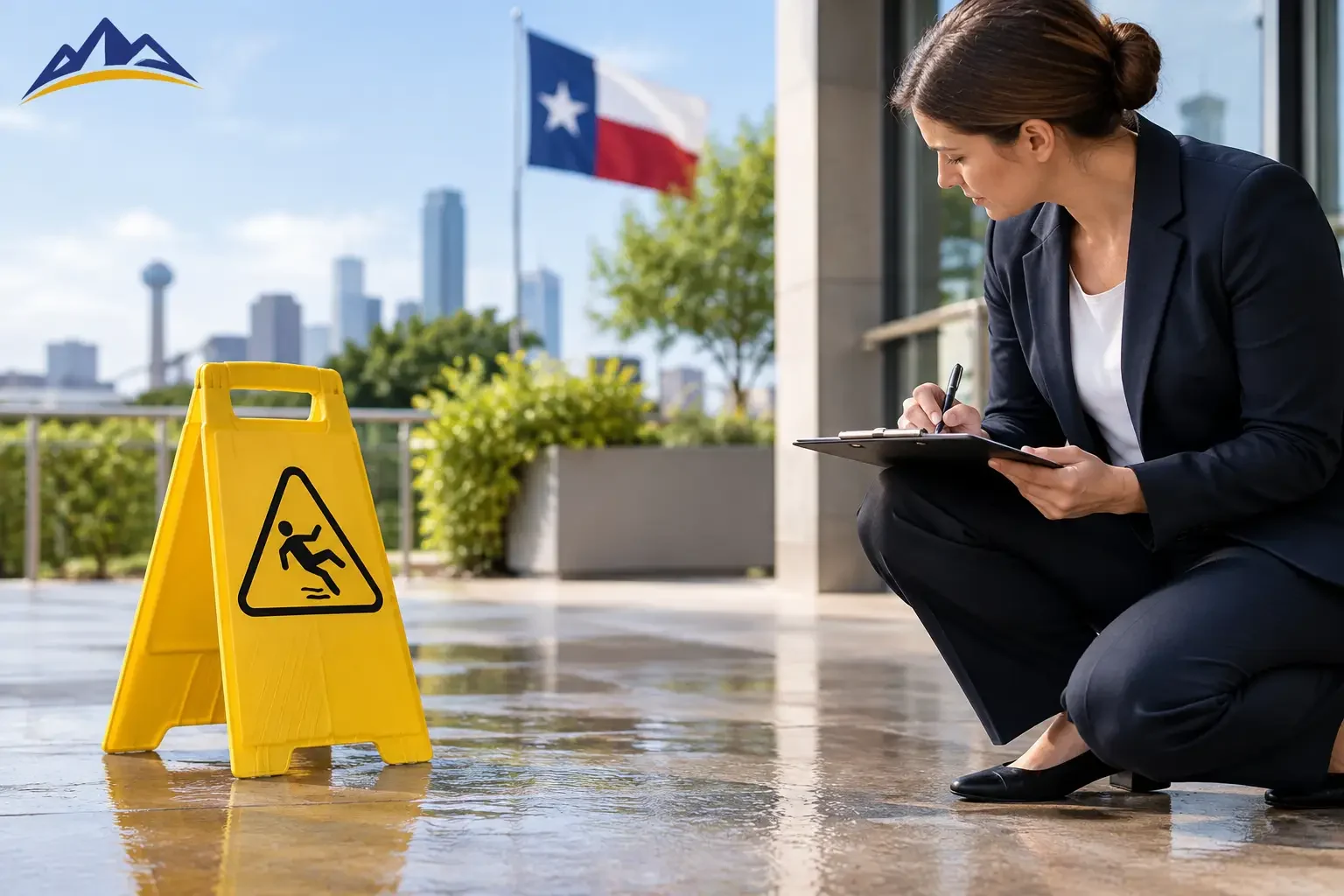
A wet grocery-store entryway, a broken apartment stair, inadequate lighting in a parking lot, or loose flooring at a business can turn an ordinary errand into a serious injury. This guide to premises liability explains when a property owner or operator may be responsible, what evidence matters, and how to protect your position after an injury in Texas.
Premises liability is not simply a claim that someone was hurt on another person’s property. The central question is whether the party responsible for the property failed to use reasonable care to address an unsafe condition or warn visitors about it. The answer depends on the facts, including why you were on the property, how long the hazard existed, who knew about it, and whether reasonable action could have prevented the harm.
Premises liability is an area of personal injury law involving injuries caused by dangerous conditions on land or in buildings. Responsibility may rest with a property owner, but ownership is not the only issue. A commercial tenant, property manager, maintenance contractor, business operator, or another party with control over the area may also share responsibility.
Common claims arise from slip-and-fall incidents, falling merchandise, uneven sidewalks, broken handrails, defective stairs, poor security, unsafe swimming pools, dog bites, construction hazards, and inadequate lighting. The condition does not need to be dramatic to cause a serious injury. A small liquid spill, loose mat, or unmarked change in floor level can lead to fractures, head injuries, back injuries, or lasting mobility problems.
A strong claim requires more than proof of an injury. It requires a careful investigation of what made the property unsafe and whether the responsible party had a fair opportunity to correct the danger.
In many Texas premises liability cases, an injured person must show that a dangerous condition created an unreasonable risk of harm, that the responsible party knew or should have known about it, that it did not take reasonable steps to protect against the danger, and that this failure caused the injury.
Knowledge is often the contested issue. A business may argue that a spill appeared moments before the fall or that it had no reasonable way to discover the problem. On the other hand, evidence may show the hazard existed long enough that employees should have found it during normal inspections. Security video, cleaning logs, maintenance records, employee statements, photographs, and prior complaints can all help answer that question.
The law also considers the injured person’s reason for being on the property. Customers, tenants, and others invited onto property for the owner’s benefit are generally owed a duty of reasonable care. Social guests may be treated differently in some situations. Trespass claims involve separate rules and can be more difficult, though property owners cannot ignore every known danger under every circumstance.
These categories matter, but they are not the whole case. The practical issue is whether the property was reasonably safe for people who could foreseeably be there.
Property owners sometimes rely on warning cones, signs, or verbal notices to argue they acted responsibly. A warning can be relevant, but it is not automatically enough. A sign placed where a visitor cannot see it, a cone far from the actual hazard, or a vague warning may not reasonably protect people from harm.
Likewise, a property owner may claim that a danger was open and obvious. That argument can affect a case, particularly if the condition was plainly visible and avoidable. Yet conditions are not evaluated in a vacuum. Lighting, crowding, distractions created by the business, emergency circumstances, the layout of the property, and whether a visitor had a safe alternative route may all matter.
Premises liability claims take many forms. A retail customer may slip on a leak near a refrigerated display. An apartment resident may fall because management ignored repeated complaints about a damaged stairway. A hotel guest may be injured in a poorly lit walkway. A bar or venue may face questions about security after an assault in an area where criminal activity or prior incidents made additional precautions foreseeable.
Construction sites can also create complicated premises claims. Workers may have rights against third parties, such as property owners, general contractors, subcontractors, or equipment companies, depending on who controlled the unsafe condition. These cases require particular care because workplace rules, contracts, workers’ compensation issues, and multiple insurance policies can overlap.
The cause of an injury may also be less obvious than a visible defect. For example, inadequate maintenance practices, a failure to inspect, insufficient staffing, or a poorly designed traffic flow can be as significant as the hazard itself. Serious representation means looking beyond the first explanation offered by an insurer or property manager.
Your health comes first. Seek prompt medical care, follow treatment recommendations, and tell your provider how and where the injury occurred. Delays in care can give insurers room to question whether the incident caused your condition, even when you were genuinely hurt.
If you can do so safely, report the incident before leaving the property and request that a report be created. Ask for the name of the manager or employee who received the report. Take photographs or video of the exact area, the condition that caused the injury, nearby warning signs, lighting, and your footwear or clothing if relevant. Preserve damaged personal items rather than throwing them away.
Witness information is often valuable. Independent witnesses may remember what employees said, whether a hazard had been present for some time, or whether others had nearly fallen. Their recollections can become difficult to locate after weeks or months pass.
Be careful with insurance communications. An adjuster may sound helpful while seeking a recorded statement or an early settlement before the full extent of your injuries is known. You can provide basic information about the incident, but avoid guessing about fault, minimizing symptoms, or accepting money before you understand what future treatment, lost earnings, and limitations may involve.
In a premises case, evidence is often controlled by the other side. Video footage may be overwritten, a spill may be cleaned, a broken fixture may be repaired, and inspection records may not be preserved unless action is taken quickly. That is why early legal guidance can make a meaningful difference.
An attorney can seek to preserve relevant evidence, identify the parties who controlled the property, review applicable insurance coverage, and investigate whether prior incidents or maintenance failures existed. Depending on the claim, this may involve analyzing surveillance footage, store policies, property records, incident reports, expert opinions, or maintenance contracts.
Medical evidence deserves the same attention. The value of a claim is not based solely on the first emergency-room bill. It may include follow-up care, physical therapy, surgery, medication, time away from work, reduced earning capacity, pain, physical limitations, and the ways an injury changes daily life. Every case is different, and no ethical lawyer can promise a result. A serious evaluation should account for both present losses and reasonably anticipated needs.
Texas generally imposes a two-year deadline for filing many personal injury lawsuits. Missing that deadline can prevent recovery, even when the underlying facts are strong. Claims involving government-owned property may have much shorter notice requirements, sometimes measured in months rather than years.
Texas also applies proportionate responsibility. An insurer may argue that the injured person was distracted, wore improper shoes, ignored a warning, or should have chosen another route. If a factfinder assigns some responsibility to the injured person, compensation may be reduced by that percentage. If the injured person is found more than 50 percent responsible, recovery may be barred.
These rules do not mean an insurer’s first assessment is correct. They mean the facts must be developed carefully. A property owner’s duty to maintain safe conditions does not disappear because an injured visitor did not anticipate a hidden or poorly addressed hazard.
The strongest claims are built with prompt action, clear documentation, and a realistic understanding of what must be proved. Preserve evidence early, keep records of medical care and missed work, and do not assume a property owner’s insurance company will fairly investigate on its own. Their interests are not necessarily aligned with yours.
At Afshar Law, every matter is approached with personal attention, integrity, and serious preparation. That means listening to how the injury has affected your life, identifying the facts that matter, and being prepared to stand up to insurers and opposing parties when they attempt to shift responsibility.
After an injury, you do not need to solve every legal question while managing pain, appointments, and financial pressure. Protect your health, preserve what you can, and get clear advice before evidence fades or a rushed settlement closes the door on the support you may need.