3100 S Gessner Rd., Ste.
205 Houston, Texas 77063
-
Free Consultation
-Personal Injury Cases Only- -
se habla español
888-755-5678
832-871-4040
se habla español
August 16 2026
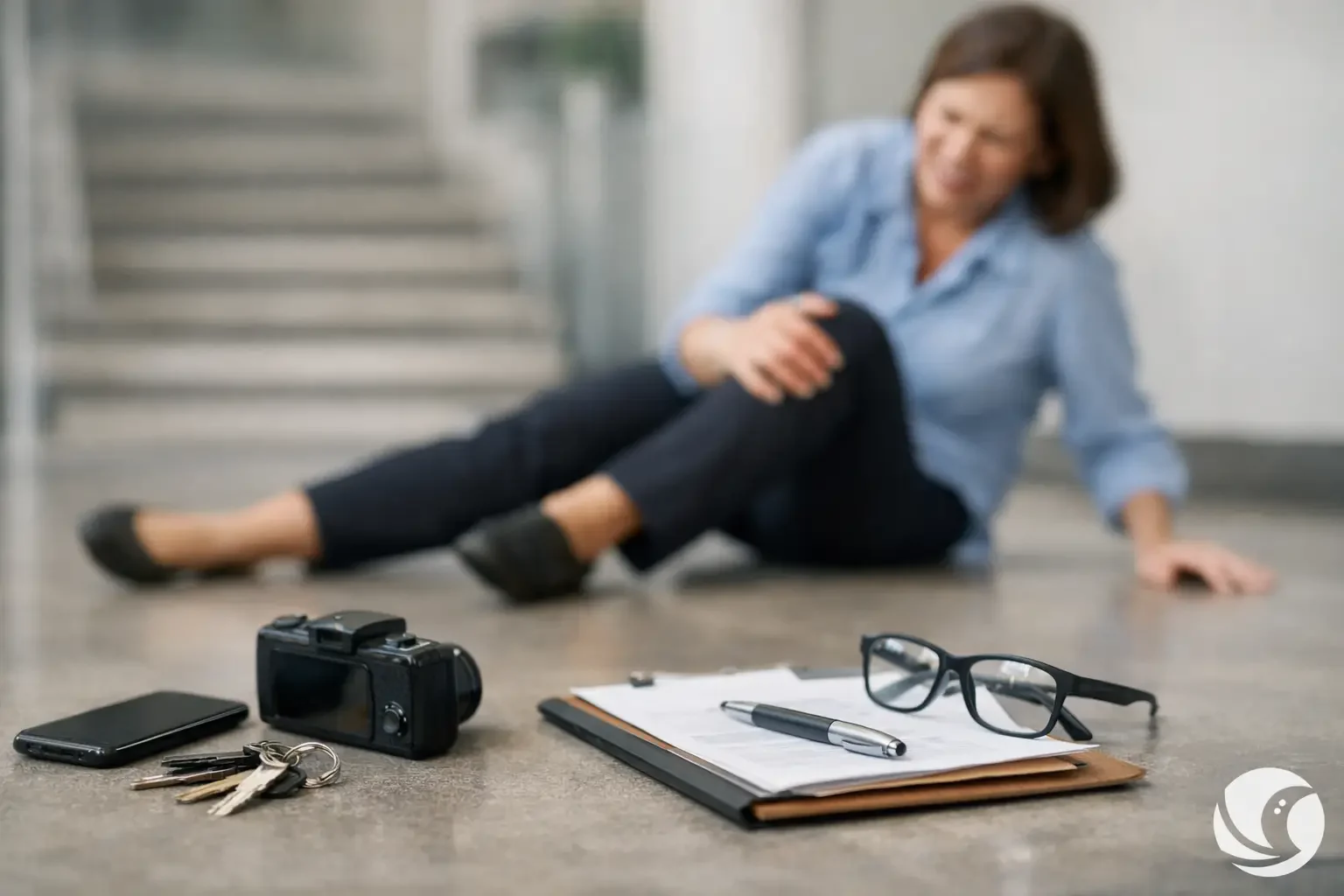
A wet floor can be dried, a broken handrail can be repaired, and surveillance footage can be recorded over within days. That is why the best evidence after slip fall injuries is often the evidence preserved immediately, before a property owner or insurer has time to dispute what happened. If you were hurt on someone else’s property, protecting the facts can be as important as seeking medical care.
A serious fall can leave you dealing with pain, missed work, medical bills, and uncertainty about what comes next. You do not need to prove your case in the first hour after an accident. But the steps you take can help preserve the information needed to determine whether a property owner failed to keep the premises reasonably safe.
A slip-and-fall claim is not automatically established because a person fell on a business’s, apartment complex’s, or private property. Falls happen for many reasons. The central questions are usually what dangerous condition existed, whether the property owner knew or should have known about it, whether the owner had a reasonable opportunity to address it, and whether that condition caused the injury.
Strong evidence connects those points. A photograph of a puddle may show a hazard. Surveillance video may show that the puddle had been there for an extended period, that employees walked past it, or that no warning sign was present. Maintenance records may show whether the area was inspected according to the property’s own procedures.
The most persuasive proof is rarely one document or one photograph standing alone. It is a clear, consistent record that explains what you encountered, why it was dangerous, what the property owner did or failed to do, and how the fall affected your life.
If your condition allows, document the area where you fell before leaving. If you need emergency care, your health comes first. A family member, friend, or another trusted person may be able to return quickly to photograph the scene or help identify potential evidence.
Photos and video should capture more than the immediate hazard. Take wide shots showing the location within the store, parking lot, stairwell, walkway, or building. Then take close images of the liquid, debris, uneven flooring, loose mat, broken step, poor lighting, or other condition involved. Include warning signs if they exist, as well as the absence of signs where they reasonably should have been.
Conditions can be temporary. Rainwater near an entrance, a spilled product in an aisle, or ice from a leaking freezer may disappear quickly. Photographs taken after employees have cleaned the area may not reflect what caused the fall. Time-stamped images can be especially helpful, but do not alter or edit them.
Your footwear can also matter. Preserve the shoes or boots you were wearing in the same condition after the incident. Do not wash them, repair them, or throw them away. An insurer may claim the shoes were worn out or unsuitable, and the actual footwear may help answer that argument.
Tell the manager, supervisor, landlord, or property representative that you fell and were hurt. Ask that an incident report be created, and request a copy if one is available. If the business will not provide a copy, write down the name and job title of the person who took the report, along with the time and date.
An incident report is useful, but it is not the final word on what happened. Some reports contain only limited information or are written from the company’s perspective. Before signing anything, read it carefully. Do not guess about facts you do not know, minimize your symptoms, or accept language that inaccurately describes the cause of the fall.
For example, if you fell because of a slick substance on the floor, avoid signing a statement that merely says you “lost balance” if that does not tell the full story. Be accurate, calm, and brief. You can provide more information later as the facts become clearer.
Witnesses can provide independent confirmation of the dangerous condition, the fall itself, or what employees did afterward. A shopper may have seen the spill before you fell. A neighbor may know that a stairway light had been out for weeks. Another employee may have heard staff discuss the problem.
Get names and contact information when possible. If someone is willing, ask them to briefly state what they observed in a text message or email. Do not pressure anyone to take a side. The value of a witness is that they can give an honest account independent of the injured person and the property owner.
It is also wise to note which employees were present. Their names may appear on name tags, receipts, or an incident report. Even when an employee will not speak with you directly, identifying them can help preserve a fuller record later.
Many commercial properties use security cameras, but video is not kept forever. Some systems overwrite footage within a matter of days or weeks. Video may show the hazard, the fall, cleanup efforts, employee activity, and whether warning cones or signs were in place.
Do not assume a property owner will preserve favorable footage voluntarily. A prompt written request to preserve surveillance video and other relevant records can be critical. The request should identify the location, approximate time, date, and specific areas where cameras may have captured the incident.
Records beyond video may also matter. Depending on the circumstances, useful materials can include inspection logs, cleaning schedules, maintenance reports, employee training policies, prior complaints, work orders, and communications about the dangerous condition. A recurring leak or unrepaired walkway defect may tell a very different story than a hazard that appeared moments before the fall.
Seek medical evaluation promptly, especially if you hit your head, have severe pain, numbness, dizziness, difficulty walking, or symptoms that worsen after the incident. Adrenaline can mask the seriousness of an injury. A delayed diagnosis does not mean an injury is not real, but prompt care often provides a clearer medical record.
Tell medical providers how the fall occurred and identify all symptoms, even those that seem minor at first. Be truthful and specific. If your lower back, shoulder, wrist, or knee hurts, say so. If you struck your head or lost consciousness, report it. Medical records can help establish that your injuries resulted from the fall rather than an unrelated event.
Keep copies of bills, discharge instructions, prescriptions, therapy referrals, mileage to appointments, and records of missed work. A daily note describing pain levels, mobility limits, sleep disruption, and activities you can no longer perform may also help show the real impact of the injury over time.
Insurance representatives may contact you soon after the incident. They may appear helpful, but their role is to protect the insurer’s interests. You can provide basic identifying information, but be cautious about recorded statements, broad medical authorizations, or early settlement offers before you understand your diagnosis and options.
Avoid posting about the fall, your activities, or your claim on social media. A single photo or casual comment can be taken out of context. It is better to keep information about your recovery private and communicate directly with your medical providers and legal counsel.
In Texas premises liability cases, the evidence may need to show that the property owner had actual or constructive notice of the dangerous condition. Actual notice can mean the owner or an employee knew about it. Constructive notice can involve evidence that the condition existed long enough that reasonable inspection and maintenance should have discovered it.
That is why timing matters. A spill that occurred seconds before a fall may be treated differently from one that remained on the floor through multiple employee walk-throughs. Similarly, a cracked sidewalk, loose carpet edge, or defective stair rail may involve repair histories and prior complaints that reveal whether the problem was allowed to continue.
Property owners and insurers may also argue that the injured person was distracted, ignored a warning, wore improper footwear, or should have seen the condition. Those arguments do not end every claim, but they make careful documentation essential. Texas law can reduce or bar recovery depending on how responsibility is assessed, so it is important to evaluate the facts early rather than rely on assumptions.
Keep a single folder, digital or physical, for evidence related to the incident. Preserve photographs and original videos, the clothes and shoes worn during the fall, medical documents, receipts, witness information, incident-report details, and all communications from the property owner or insurer. Write down your own account while the details are fresh, including the time, lighting, weather, location, condition of the surface, and what happened immediately afterward.
Do not repair, discard, or alter evidence simply because it is inconvenient to store. A damaged shoe, torn clothing, or photograph of an apparently small hazard can become meaningful when considered alongside witness accounts, video, and medical proof.
A fall can change far more than your plans for the day. If a dangerous condition caused your injury, timely evidence preservation gives you a stronger foundation to protect your interests, ask the right questions, and pursue accountability with the seriousness your situation deserves.