3100 S Gessner Rd., Ste.
205 Houston, Texas 77063
-
Free Consultation
-Personal Injury Cases Only- -
se habla español
888-755-5678
832-871-4040
se habla español
July 17 2026
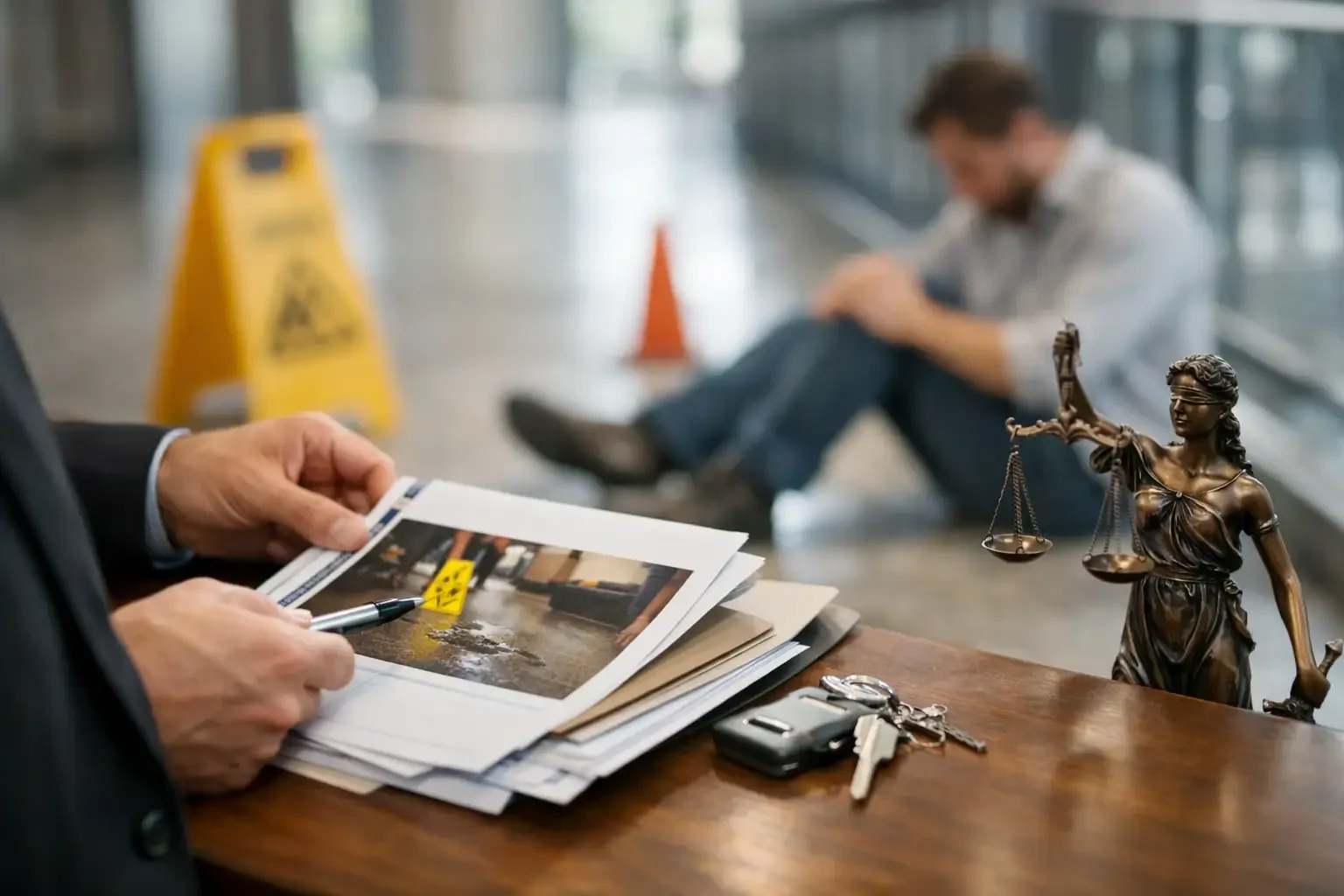
A wet floor is cleaned. A broken handrail is repaired. Security footage records over itself. Within days of a fall or other injury, the proof of what happened can begin to disappear. That is why premises liability evidence Texas injury victims collect early can shape whether an insurance company takes a claim seriously or tries to deny responsibility.
If you were hurt at a grocery store, apartment complex, restaurant, parking lot, construction site, hotel, or another property, the pain is only part of the problem. You may also be facing medical bills, missed work, and an owner or insurer suggesting that the incident was simply an accident. Strong evidence helps protect your right to seek accountability when unsafe property conditions caused preventable harm.
A premises liability case is not automatically established because someone was injured on another person’s property. Texas law generally requires an injured person to show that the property owner, occupier, manager, or another responsible party had a duty to keep the premises reasonably safe, knew or should have known about an unreasonably dangerous condition, failed to use reasonable care to address it or warn visitors, and caused the injury.
The details matter. The duty owed can depend on why the person was on the property. Customers in a business, tenants, and invited guests are often owed a duty to protect against or warn of dangerous conditions the owner knew about or reasonably should have discovered. The legal analysis may be different for a social guest or someone who entered property without permission.
That is one reason property insurers focus so heavily on notice. They may argue there was no proof that the owner knew about the spill, loose tile, poor lighting, defective gate, damaged staircase, or inadequate security condition before the injury occurred. Evidence must tell the complete story, not merely show the injury.
The best evidence is often the evidence created closest in time to the incident. It can document the hazardous condition before repairs, cleanup, fading memories, or missing records make the facts harder to establish.
Photographs can show a spill with no warning sign, a cracked sidewalk, a missing stair tread, uneven flooring, obstructed walkways, poor lighting, or unsafe conditions around a pool or parking area. Take wide photos to establish the location and closer images to capture the defect. If possible, photograph nearby cameras, warning signs, weather conditions, footwear, lighting, and the route you were required to use.
Video may be even more revealing. Store or apartment surveillance can show how long a hazard existed, whether employees walked past it, the absence of warnings, or the moments immediately before and after the incident. The property owner controls this footage in many cases, and retention periods can be short. Prompt action to preserve it is critical.
Report the incident before leaving the property when your condition permits. Ask that the report accurately identify where and when it happened, what caused it, and which employees or managers responded. Request a copy if one is available, but do not assume a business will voluntarily provide it.
Be careful with recorded statements, forms, and casual conversations with an insurer. A person in pain may not know the full extent of an injury or may unintentionally minimize what happened. Stick to the facts. Do not guess about conditions you did not see or accept blame simply because an employee suggests you should have noticed the hazard.
An independent witness can be powerful evidence. A fellow customer, neighbor, delivery driver, tenant, or employee may have seen the dangerous condition, the fall, prior complaints, or the property owner’s response afterward. Obtain names, phone numbers, and email addresses when possible.
Witness memories change quickly. A statement gathered early is usually more useful than a recollection offered months later, after the property has been repaired and the dispute has hardened.
A property owner may have records showing routine inspection schedules, cleaning logs, maintenance requests, repair invoices, prior incident reports, tenant complaints, employee communications, or vendor contracts. These documents may establish that a condition existed long enough to be discovered, that similar problems had occurred before, or that the owner failed to follow its own safety procedures.
For example, a store may claim a spill happened seconds before a customer fell. But inspection logs, surveillance footage, and employee testimony may show no one checked that aisle for an extended period. In an apartment case, repeated written complaints about a broken railing or inadequate lighting can directly address the owner’s prior notice.
Medical records connect the incident to the injuries you suffered. Seek appropriate medical care promptly, follow treatment recommendations, and keep records of appointments, prescriptions, therapy, imaging, and out-of-pocket costs. Delays in treatment do not automatically defeat a claim, but insurers frequently use gaps in care to question whether an injury was caused by the incident.
Lost-wage documentation also matters. Pay stubs, employer letters, tax records, and work restriction notes can help demonstrate income lost while recovering. Serious injuries may require evidence from treating physicians, rehabilitation providers, vocational experts, or other qualified professionals to explain future medical needs and reduced earning capacity.
In many Texas premises cases, the question is not whether a floor was wet or a walkway was damaged. The dispute is whether the responsible party had actual or constructive knowledge of the danger.
Actual knowledge may come from an employee seeing the hazard, a tenant submitting a maintenance request, a manager receiving a complaint, or a prior incident at the same location. Constructive knowledge means the condition existed long enough, or was apparent enough, that reasonable inspection and maintenance would have uncovered it.
There is no fixed number of minutes or days that proves constructive knowledge in every case. A puddle near a store entrance during heavy rain may raise different questions than a deteriorating stairway in a residential complex. The property’s inspection practices, the nature of the hazard, foot traffic, weather, prior complaints, and surveillance evidence can all affect the analysis.
Property owners and insurers often argue that the injured person was distracted, ignored an obvious warning, wore improper shoes, entered a restricted area, or caused the incident. Texas uses a proportionate responsibility system. If a fact finder assigns some fault to the injured person, a recovery may be reduced by that percentage. If the injured person is found more than 50% responsible, recovery may be barred.
That does not mean an insurer’s first version of events is correct. Photos, video, witness testimony, lighting records, and the layout of the property may show that a warning was not visible, a path was unavoidable, or the condition was far more dangerous than the owner admits. Evidence protects against a one-sided narrative.
Your health comes first. After receiving needed medical attention, preserve what you can. Keep the shoes and clothing worn during the incident without washing or altering them if they may show residue, tears, or other relevant details. Save photos, messages, receipts, medical paperwork, and any communications with the property owner or insurer.
Avoid posting about the incident or your activities on social media. A single photo or comment, stripped of context, may be used to challenge the severity of an injury. Do not authorize broad access to private medical records without understanding what is being requested and why.
Texas generally has a two-year deadline for many personal injury claims, but waiting is risky even when the filing deadline is not close. Claims involving government-owned property can involve much shorter notice requirements. The right strategy depends on the property, the cause of the injury, the available insurance, and the evidence that can still be preserved.
A thorough premises liability investigation may require more than collecting photographs. It can involve identifying every responsible party, preserving surveillance footage, reviewing maintenance practices, examining contracts between owners and contractors, interviewing witnesses, and working with appropriate experts when the condition or injuries are complex.
At Afshar Law, every matter is approached with personal attention, integrity, and a commitment to serious preparation. You should not have to face an insurance company alone while trying to heal.
If an unsafe property condition injured you or someone you love, acting early can help preserve the proof that may otherwise be lost. A careful legal evaluation can clarify your options and help protect your claim before the facts are rewritten by time.